

Instant Noodles Market to Reach USD 123.45 Billion by 2035, Growing at 8.50% CAGR
Instant Noodles Market
Convenience demand, premium noodle innovation, e-commerce growth, and urbanization are fueling global instant noodles market expansion.
Convenience, nutrition, and premiumization are redefining the instant noodles industry as manufacturers innovate to meet changing consumer lifestyles and global food demand.”
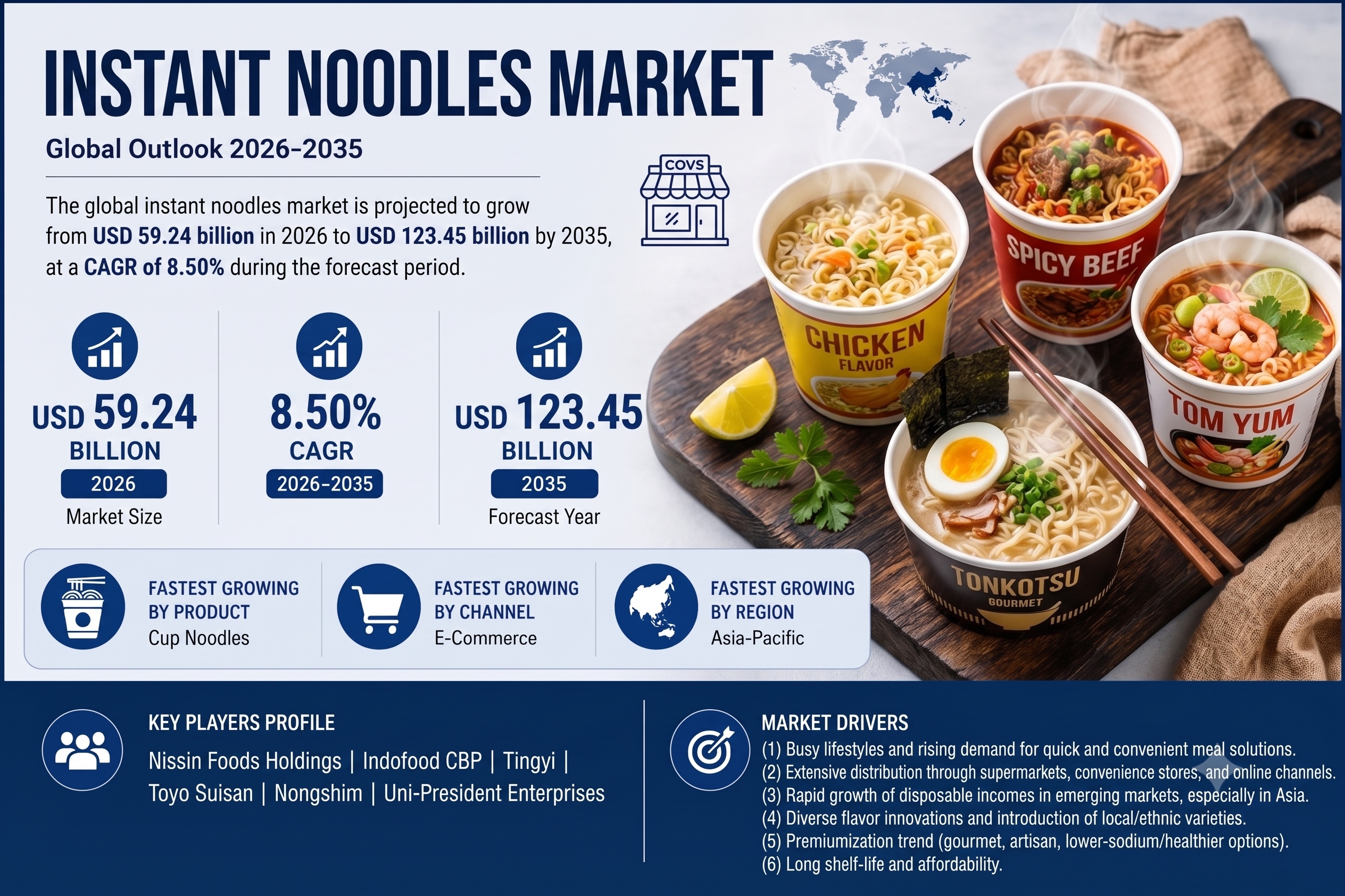
NEW YORK, NY, UNITED STATES, July 17, 2026 /EINPresswire.com/ -- The global Instant Noodles Market is witnessing strong growth as consumers worldwide increasingly seek convenient, affordable, and ready-to-cook meal solutions that fit modern lifestyles. According to Market Research Future (MRFR), the market is projected to grow from USD 59.24 billion in 2026 to USD 123.45 billion by 2035, registering a compound annual growth rate (CAGR) of 8.50% during the forecast period of 2026–2035.— Market Research Future (MRFR)
The instant noodles industry has moved well beyond its origins as a low-cost convenience food category. Today, it is a diversified global market shaped by premium recipes, healthier formulations, regional flavor innovation, functional nutrition, and digitally enabled distribution. Manufacturers are investing in research and development, sustainable packaging, advanced product formats, and omnichannel retail strategies to meet changing consumer expectations across developed and emerging economies.
Market Overview
Instant noodles have become one of the world's most widely consumed packaged food products because they combine affordability, long shelf life, convenience, and broad flavor appeal. Their popularity continues to rise as urbanization accelerates, dietary habits shift, disposable incomes increase, and consumers seek meals that can be prepared quickly without sacrificing taste or satisfaction.
The market is also benefiting from the modernization of retail infrastructure. Supermarkets, convenience stores, online grocery platforms, and quick-commerce services are making instant noodles more accessible than ever before. In many markets, consumers can now order packaged foods through mobile applications and receive them within minutes, reinforcing the category’s position as a staple of modern food consumption.
At the same time, consumer preferences are changing. Shoppers are no longer satisfied with basic low-cost noodle products alone. They increasingly want premium, healthier, and more functional options that align with wellness goals and lifestyle preferences. In response, manufacturers are introducing products made with whole grains, reduced sodium, plant-based proteins, organic ingredients, and fortified nutrients. These innovations are helping the category move from a purely convenience-driven segment into a more sophisticated and value-added food market.
The study period covering 2026 through 2035 reflects an industry in transition. Instant noodles are increasingly being positioned as complete meal solutions that can address nutrition, convenience, taste, and sustainability at the same time. This shift is expected to support long-term market expansion and create new opportunities for both established brands and emerging players.
Key Market Highlights
The Instant Noodles Market demonstrates strong long-term expansion supported by multiple structural and consumer-driven growth factors.
• Market Size (2026): USD 59.24 Billion
• Market Size (2035): USD 123.45 Billion
• Forecast CAGR (2026–2035): 8.50%
• Forecast Period: 2026–2035
• Major Growth Driver: Rising dual-income and single-person households
• Emerging Trend: Premiumization and health-fortified noodle products
• Digital Growth Catalyst: E-commerce and quick-commerce expansion
• Key Opportunity: Functional and fortified noodle innovation
• Emerging Regional Opportunity: African urbanization and expanding consumer markets
• Future Sales Channel: Direct-to-consumer subscriptions and digital commerce
These indicators reflect an industry that is becoming increasingly innovation-driven while maintaining its appeal as one of the world's most accessible convenience food categories. The combination of affordability, adaptability, and product diversification continues to make instant noodles a resilient and scalable segment within the global packaged foods industry.
Get Full PDF Sample Copy of Report: (Including Full TOC, List of Tables & Figures, Chart) @ https://www.marketresearchfuture.com/sample_request/1841
Convenience Continues to Drive Consumer Demand
Modern lifestyles have fundamentally reshaped food consumption habits across the globe. Longer working hours, urban migration, smaller household sizes, and increasingly busy schedules have all contributed to stronger demand for foods that require minimal preparation time. Instant noodles fit this need exceptionally well because they are easy to store, quick to prepare, and widely available across retail channels.
Students, office workers, young professionals, travelers, and single-person households remain among the largest consumer groups for instant noodles. For these consumers, the category offers a practical balance of affordability, portability, and consistent taste. In many markets, instant noodles are not only a backup meal but also a regular part of weekly food purchasing patterns.
Manufacturers are responding by expanding product portfolios across multiple price points and usage occasions. While value-oriented products continue to dominate volume sales, premium offerings and gourmet flavors are gaining traction among consumers who want more variety and better ingredient quality. This dual strategy allows brands to serve both budget-conscious buyers and consumers seeking elevated meal experiences.
The increasing number of dual-income families has also accelerated demand for quick meal options that reduce cooking time without compromising taste. This demographic shift is expected to remain one of the strongest long-term demand drivers throughout the forecast period, particularly in urban centers where convenience and time efficiency are central to food purchasing decisions.
Premiumization Reshaping the Industry
One of the most influential transformations occurring within the market is premiumization. Consumers today increasingly seek restaurant-quality experiences at home, and instant noodles are evolving to meet that expectation. As disposable incomes rise, shoppers are becoming more willing to pay higher prices for products that offer authentic regional recipes, air-dried noodles, gourmet broths, premium spices, exotic ingredients, and superior textures.
Manufacturers are launching premium product lines inspired by Japanese ramen, Korean spicy noodles, Thai cuisine, Chinese regional specialties, and Southeast Asian street foods. These products often feature richer flavor profiles, more complex seasoning blends, and improved noodle textures that create a more satisfying eating experience. In many cases, premium noodles are marketed not just as a meal but as an indulgent culinary experience.
Limited-edition flavors, chef collaborations, premium packaging, and restaurant-inspired meal kits have become powerful marketing tools that help companies differentiate products in an increasingly competitive marketplace. These strategies are particularly effective among younger consumers who value novelty, authenticity, and social-media-friendly food experiences.
Premiumization also supports higher profit margins, encouraging manufacturers to continue investing in innovation and product development. As a result, the premium segment is expected to remain one of the most dynamic areas of growth within the broader instant noodles market.
Health and Wellness Become Strategic Priorities
Health-conscious consumers are transforming product development strategies across the global instant noodles industry. Traditional instant noodles have often faced criticism regarding sodium levels, preservatives, and nutritional balance. In response, manufacturers are introducing healthier alternatives that better align with modern wellness expectations.
These alternatives include reduced sodium formulations, whole grain noodles, multigrain ingredients, high-protein recipes, plant-based proteins, organic ingredients, added vitamins and minerals, dietary fiber enrichment, gluten-free alternatives, and clean-label ingredients. Such innovations are helping brands appeal to consumers who want convenience without compromising nutritional quality.
Functional nutrition is becoming an increasingly important differentiator. Fortified instant noodles containing iron, calcium, vitamin B complex, zinc, probiotics, and plant-based nutrients are attracting consumers seeking convenient meals with added health benefits. This is especially relevant in markets where food fortification plays a role in addressing nutritional gaps and supporting public health objectives.
The health and wellness trend is particularly significant in developing countries, where fortified food products can contribute to improved nutritional intake among growing populations. At the same time, it is also gaining momentum in developed markets where consumers are more attentive to ingredient transparency, calorie control, and dietary compatibility.
Rising Demand from Single-Person Households
Demographic changes continue reshaping global food purchasing behavior. Growing numbers of young professionals, students, migrant workers, and elderly individuals living alone have substantially increased demand for single-serving packaged foods. This trend is especially important for the instant noodles market because the category naturally aligns with the needs of smaller households.
Single-person households prioritize convenience, portion control, affordability, and minimal food waste. Instant noodles meet all of these requirements by offering individual serving sizes, quick preparation, and extended shelf life. For consumers living alone, the ability to prepare a satisfying meal without extensive cooking or cleanup is a major advantage.
Countries including Japan, South Korea, China, Germany, the United States, and several European nations continue experiencing steady growth in single-person households. This demographic shift is expected to support long-term market expansion, particularly in urban areas where compact living and fast-paced routines are increasingly common.
E-Commerce and Quick-Commerce Revolutionize Distribution
Digital commerce has become one of the strongest growth catalysts for the instant noodles industry. Consumers increasingly purchase packaged foods through online grocery platforms, mobile commerce applications, food delivery apps, quick-commerce services, direct-to-consumer websites, and subscription meal platforms. This shift has expanded product accessibility and changed the way brands interact with shoppers.
The expansion of same-day and ultra-fast delivery services has significantly increased the convenience of purchasing instant noodles. Consumers can now replenish pantry staples with minimal effort, while brands benefit from broader reach and improved visibility across digital storefronts. In many markets, online channels are also becoming important for launching new flavors and limited-edition products.
Manufacturers are collaborating with digital retailers to launch exclusive online products, promotional campaigns, subscription packages, and personalized purchasing experiences. These partnerships help brands strengthen customer loyalty while also creating opportunities for targeted marketing and repeat purchases.
Data analytics generated through digital sales channels provide manufacturers with valuable consumer insights. These insights can be used to refine product development, optimize pricing, improve inventory planning, and create more effective marketing strategies. As digital commerce continues to expand, it is expected to play an increasingly central role in the growth of the instant noodles market.
Functional and Fortified Noodles Create New Opportunities
One of the industry's most promising growth opportunities lies in functional food innovation. Consumers increasingly expect food products to provide health benefits beyond basic nutrition, and instant noodles are being reformulated to meet that expectation.
Manufacturers are developing instant noodles enriched with protein isolates, plant-based ingredients, collagen peptides, omega fatty acids, dietary fiber, antioxidants, herbal extracts, vitamins, minerals, and probiotics. These value-added products appeal to athletes, health-conscious consumers, aging populations, and wellness-focused households seeking convenient nutrition.
Functional noodles also command premium pricing, which supports improved profitability across manufacturers. This makes the segment attractive not only from a consumer perspective but also from a commercial standpoint. As ingredient technology advances and consumer awareness grows, functional noodles are likely to become a more important part of the category’s long-term growth strategy.
African Urbanization Presents Significant Growth Potential
Africa represents one of the most attractive emerging markets for instant noodle manufacturers. Rapid population growth, expanding middle-class income, urban migration, and improving retail infrastructure are creating favorable conditions for packaged food adoption across the continent.
Countries including Nigeria, Kenya, Ghana, Ethiopia, Egypt, and South Africa continue investing heavily in retail modernization and food manufacturing. These developments are improving product availability and supporting the growth of branded packaged foods in both urban and peri-urban areas.
International companies are increasingly entering African markets through local manufacturing facilities, strategic partnerships, and regional distribution networks. This approach helps reduce logistics costs, improve affordability, and adapt products to local consumer preferences. Localized flavor development and competitive pricing strategies are expected to accelerate consumer adoption throughout the forecast period.
Direct-to-Consumer Business Models Gain Momentum
Manufacturers are increasingly establishing direct relationships with consumers through subscription services and branded online platforms. This shift reflects a broader transformation in food retail, where brands are seeking greater control over customer engagement and purchasing data.
Subscription models offer several advantages, including predictable recurring revenue, stronger customer loyalty, personalized product recommendations, limited-edition product launches, consumer purchasing insights, and lower distribution costs. For manufacturers, these models create a more direct and measurable connection with end users.
Direct-to-consumer strategies also enable brands to rapidly introduce new flavors while gathering immediate consumer feedback. This agility is especially valuable in a category where taste preferences, packaging formats, and product novelty can strongly influence repeat purchases. Over the next decade, direct-to-consumer commerce is expected to become an increasingly important competitive advantage.
Competitive Landscape
The global Instant Noodles Market remains highly competitive, with leading multinational companies focusing on product innovation, geographic expansion, manufacturing efficiency, and digital marketing strategies. Major companies profiled include Nissin Foods Holdings, Indofood CBP, Tingyi, Toyo Suisan, Nongshim, and Uni-President Enterprises.
These companies continue investing heavily in manufacturing automation, premium product launches, sustainable packaging solutions, regional flavor innovation, and digital consumer engagement. Their strategies reflect the need to balance scale, affordability, and innovation in a market where consumer expectations are evolving rapidly.
Strategic mergers, acquisitions, licensing agreements, celebrity partnerships, and collaborations with online retail platforms continue strengthening competitive positioning across international markets. Research and development spending remains high as manufacturers compete to launch healthier, tastier, and more sustainable products that appeal to changing consumer preferences.
Sustainability Drives Industry Innovation
Environmental sustainability has become an increasingly important strategic priority across the instant noodles industry. Consumers are paying closer attention to packaging waste, sourcing practices, and the environmental footprint of the products they buy. In response, manufacturers are implementing initiatives that support both operational efficiency and brand responsibility.
These initiatives include recyclable packaging, reduced plastic usage, sustainable sourcing, renewable manufacturing energy, lower carbon emissions, responsible palm oil procurement, water conservation, and food waste reduction. Such measures are becoming more important as governments, retailers, and consumers place greater emphasis on environmental accountability.
Consumers increasingly prefer brands that demonstrate measurable environmental responsibility, encouraging companies to integrate sustainability throughout production and supply chain operations. These initiatives also strengthen brand reputation while supporting compliance with evolving environmental regulations worldwide.
Future Market Outlook
The outlook for the Instant Noodles Market remains exceptionally positive through 2035. Growing urbanization, rising disposable incomes, expanding digital commerce, healthier product innovation, premium offerings, and broader global distribution will continue driving market expansion.
Manufacturers capable of balancing affordability with nutrition, sustainability, premium quality, and digital consumer engagement are expected to achieve the strongest long-term growth. As instant noodles evolve into increasingly sophisticated meal solutions, the industry will continue attracting investment, technological innovation, and expanding consumer demand across virtually every global region.
With projected market revenues reaching USD 123.45 billion by 2035, the industry is positioned to remain one of the fastest-growing segments within the global packaged foods sector.
Discover Related Research Reports By Market Research Future:
Instant Beverage premix Market
https://www.marketresearchfuture.com/reports/instant-beverage-premix-market-4475
Quick Service Restaurants (QSR) Market
https://www.marketresearchfuture.com/reports/quick-service-restaurants-qsr-market-10541
China Instant Noodles Market
https://www.marketresearchfuture.com/reports/china-instant-noodles-market-57961
Sagar Kadam
Market Research Future
+1 628-258-0071
email us here
Legal Disclaimer:
EIN Presswire provides this news content "as is" without warranty of any kind. We do not accept any responsibility or liability for the accuracy, content, images, videos, licenses, completeness, legality, or reliability of the information contained in this article. If you have any complaints or copyright issues related to this article, kindly contact the author above.
